How To Calculate Gradient On A Topographic Map Travel Guide
How To Calculate Gradient On A Topographic Map Travel Guide
Introduction
If you’re planning an outdoor adventure that involves hiking and navigating through the wilderness, it’s essential to know how to read a topographic map. One of the most critical aspects of map reading is understanding the gradient or slope of the terrain you’ll be traversing. In this comprehensive travel guide, we’ll take you through the steps on how to calculate gradient on a topographic map. We’ll also cover the top attractions, hidden gems, food scene, budget-friendly tips, outdoor adventures, historical landmarks, family-friendly activities, off-the-beaten-path experiences, natural wonders, vibrant nightlife, local markets, beaches and mountains, cultural immersion, art and music scene, walking tours, architectural marvels, historical sites, biking routes, wellness retreats, and adventure sports that you can enjoy while exploring the great outdoors.
What is Gradient on a Topographic Map?
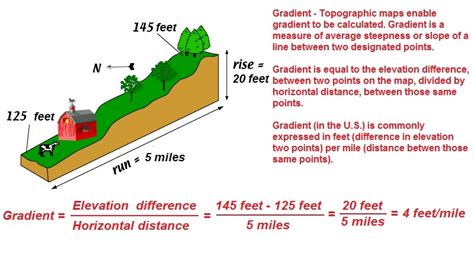
Gradient or slope is the measure of how steep or gentle the land is. It is calculated by dividing the vertical distance between two points by the horizontal distance between those points. On a topographic map, gradient is indicated by contour lines which are lines that connect points of equal elevation. The closer the contour lines are to each other, the steeper the gradient. Conversely, the farther apart the contour lines are, the gentler the gradient.
Step-by-Step Guide on How to Calculate Gradient on a Topographic Map
Here’s a step-by-step guide on how to calculate gradient on a topographic map:
Locate the two points on the map that you want to calculate the gradient between.
Measure the horizontal distance between the two points using a ruler or the scale on the map.
Find the contour lines that pass through each of the two points.
Read the elevation of each point from the contour lines.
Subtract the elevation of the lower point from the elevation of the higher point to get the vertical distance.
Divide the vertical distance by the horizontal distance to get the gradient.
Convert the gradient to a percentage by multiplying it by 100.
Top Attractions
Aside from learning how to calculate gradient on a topographic map, there are plenty of other things to see and do in the great outdoors. Here are some top attractions you wouldn’t want to miss:
Yellowstone National Park – home to geysers, hot springs, and other geothermal wonders
Grand Canyon – one of the most iconic natural wonders in the world
Yosemite National Park – a paradise for hikers, climbers, and nature lovers
Rocky Mountain National Park – a stunning landscape of mountains, lakes, and wildlife
Zion National Park – home to towering sandstone cliffs and narrow canyons
Hidden Gems
While the top attractions are certainly worth visiting, there are plenty of hidden gems that are off the beaten path. Here are some hidden gems that you should add to your itinerary:
The Wave – a stunning sandstone formation in Arizona
The Narrows – a slot canyon in Zion National Park
The Subway – a unique rock formation in Zion National Park
Devils Postpile National Monument – a columnar basalt formation in California
Lost Coast – a rugged stretch of coastline in Northern California
Food Scene
Exploring the great outdoors can work up quite an appetite. Luckily, there are plenty of delicious food options available. Here are some must-try dishes:
Bison burgers – a staple in Yellowstone National Park
Navajo tacos – a Southwest specialty made with fry bread
Campfire s’mores – a classic camping dessert
Wild game – try elk, deer, or antelope for a unique dining experience
Fresh fish – catch your own or enjoy a seafood feast in coastal towns
Budget-Friendly Tips
Exploring the great outdoors doesn’t have to break the bank. Here are some budget-friendly tips:
Camp instead of staying in hotels
Bring your own food and cook your meals
Take advantage of free activities like hiking and wildlife watching
Visit national parks during the off-season for lower entrance fees and fewer crowds
Use public transportation or carpool to save on gas
Outdoor Adventures
Of course, the main reason to explore the great outdoors is to experience some thrilling outdoor adventures. Here are some activities to try:
Hiking – there are trails for all levels of experience
Climbing – test your skills on rock faces or indoor climbing walls
Mountain biking – hit the trails on two wheels
White-water rafting – navigate rapids and enjoy the scenery
Snowboarding or skiing – hit the slopes in winter
Family-Friendly Activities
Exploring the great outdoors can be a fun and educational experience for the whole family. Here are some family-friendly activities:
Jr. Ranger programs – many national parks offer programs for kids to learn about nature and earn badges
Geocaching – a treasure hunt using GPS coordinates
Biking – rent bikes and explore scenic paths
Nature walks – take a leisurely stroll and learn about local flora and fauna
Wildlife watching – spot animals like bears, elk, and bison in their natural habitat
Off-the-Beaten-Path Experiences
If you’re looking for an adventure that’s a little more unique, try these off-the-beaten-path experiences:
Backpacking – carry your gear and hike into the wilderness for a multi-day adventure
Canyoneering – rappel down waterfalls and navigate narrow canyons
Hot springs soaking – relax in natural hot springs
Rockhounding – hunt for gems and minerals in the great outdoors
Stargazing – enjoy a night sky full of stars in a remote location
Natural Wonders
The great outdoors is full of natural wonders that will take your breath away. Here are some must-see natural wonders:
Old Faithful – the iconic geyser in Yellowstone National Park
Half Dome – a granite dome in Yosemite National Park
Delicate Arch – a natural arch in Arches National Park
The Wave – a sandstone formation in Arizona
The Grand Prismatic Spring – a colorful hot spring in Yellowstone National Park
Vibrant Nightlife
After a day of outdoor adventure, it’s time to unwind and enjoy some nightlife. Here are some destinations with vibrant nightlife:
Aspen, Colorado – a ski town with a lively bar scene
Moab, Utah – a town with plenty of restaurants and bars
Austin, Texas – a city with live music and a thriving bar scene
Portland, Oregon – a city with craft breweries and trendy bars
Las Vegas, Nevada – the ultimate destination for nightlife
Local Markets
Exploring local markets is a great way to experience the local culture and cuisine. Here are some local markets to check out:
Farmers markets – find fresh produce and artisanal products
Craft markets – discover unique handmade items
Flea markets – hunt for vintage treasures
Fish markets – sample fresh seafood
Street markets – try local street food and snacks
Beaches and Mountains
The great outdoors offers a diverse landscape of beaches and mountains. Here are some destinations that offer both:
Big Sur, California – a rugged coastline and stunning mountain views
Maui, Hawaii – sandy beaches and volcanic mountains
Great Smoky Mountains National Park – a mountain range with streams and waterfalls
Acadia National Park – a coastal park with mountains and lakes
St. Lucia – a Caribbean island with sandy beaches and volcanic peaks
Cultural Immersion
GEL1010 Topo Slope & Slope Angles YouTube from www.youtube.com